Balayage, ombre, and foilyage are all lightening techniques, but they produce very different results. The balayage vs ombre difference comes down to blending method and placement. This guide breaks down all three so Queensland women can walk in knowing exactly what to ask for.
Most clients use these three terms interchangeably. That mix-up costs them. Wrong technique for their hair type, a grow-out that looks harsh within weeks, or a result that fights Queensland humidity instead of working with it.
Bharti sees this at Hair Hub Hillcrest every week. Clients travelling from Browns Plains and Park Ridge book “balayage” and mean something completely different each time. One wants a soft root melt. Another wants a stark two-tone contrast. Getting the language right before anything is mixed changes the entire outcome.
By the end of this guide, you will know which technique suits your hair type, your grow-out tolerance, and the reality of living in a subtropical climate where humidity sits between 65 to 90 percent for most of the year.
What actually is the difference between balayage, ombre, and foilyage?
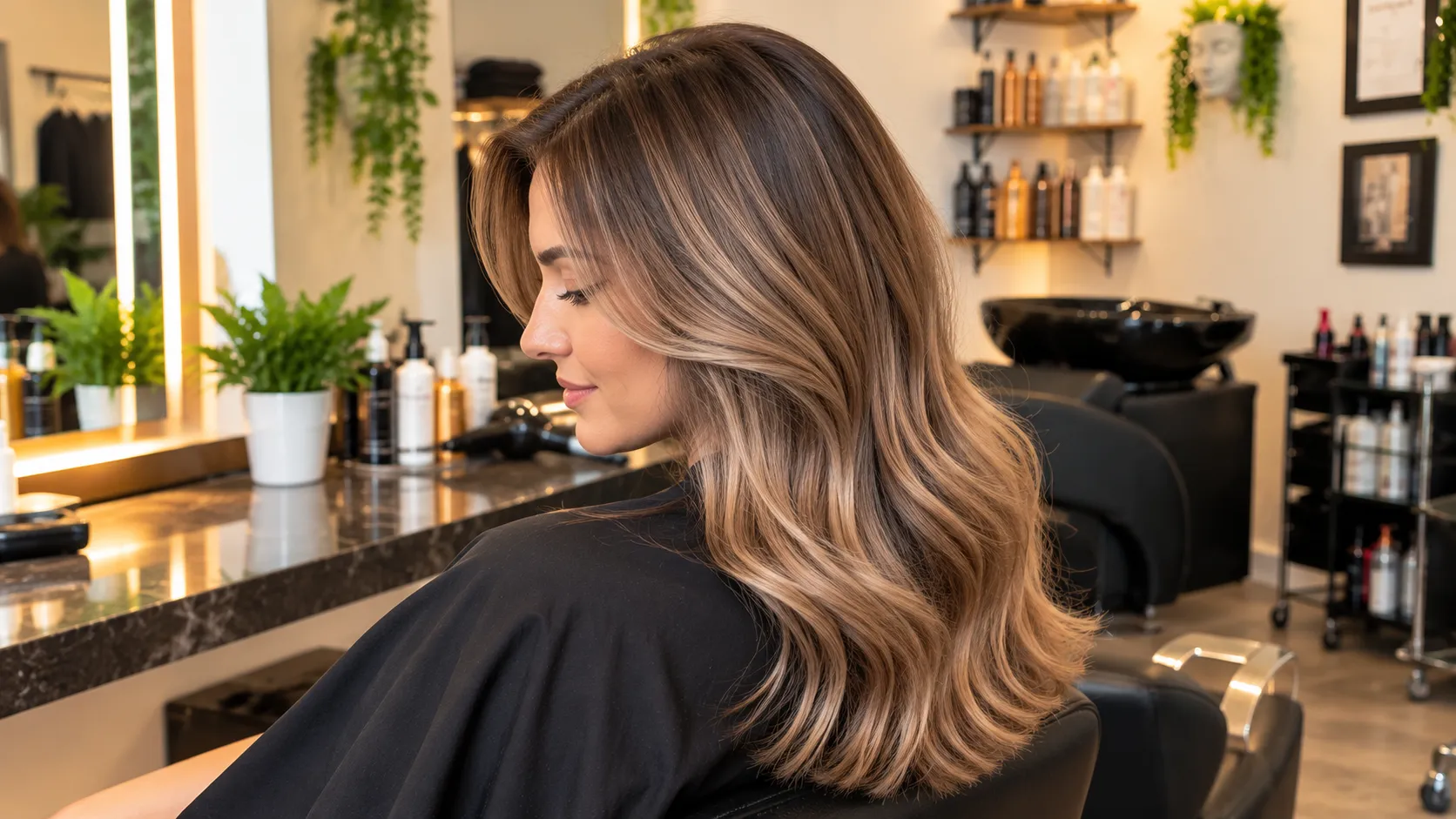
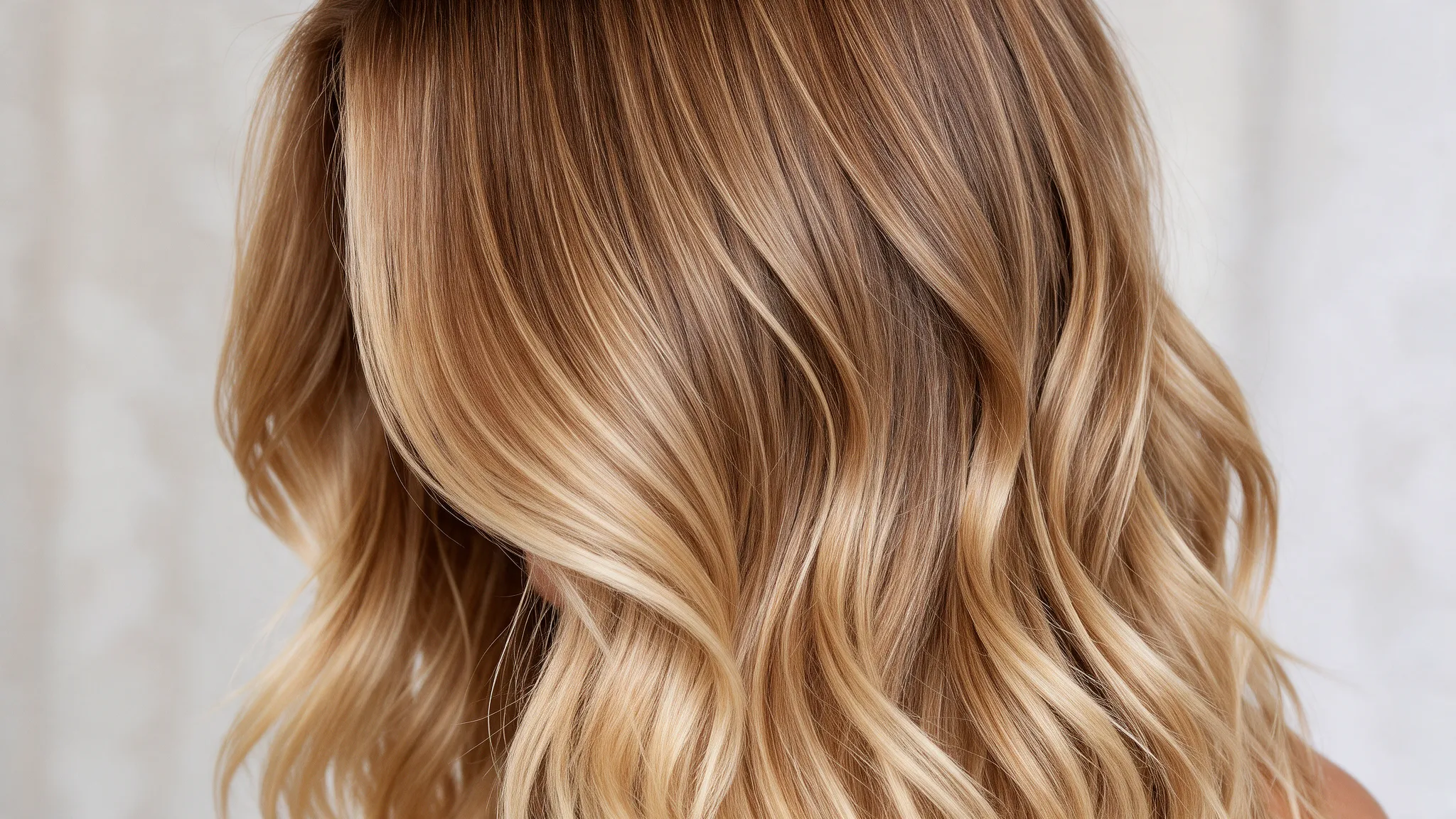
Balayage is a freehand painting technique. Colour is swept onto the surface of hair sections with no foil wrapping, which produces softer, less uniform lightening that mimics natural sun exposure. Grow-out is gradual and flattering. No harsh regrowth line to manage.
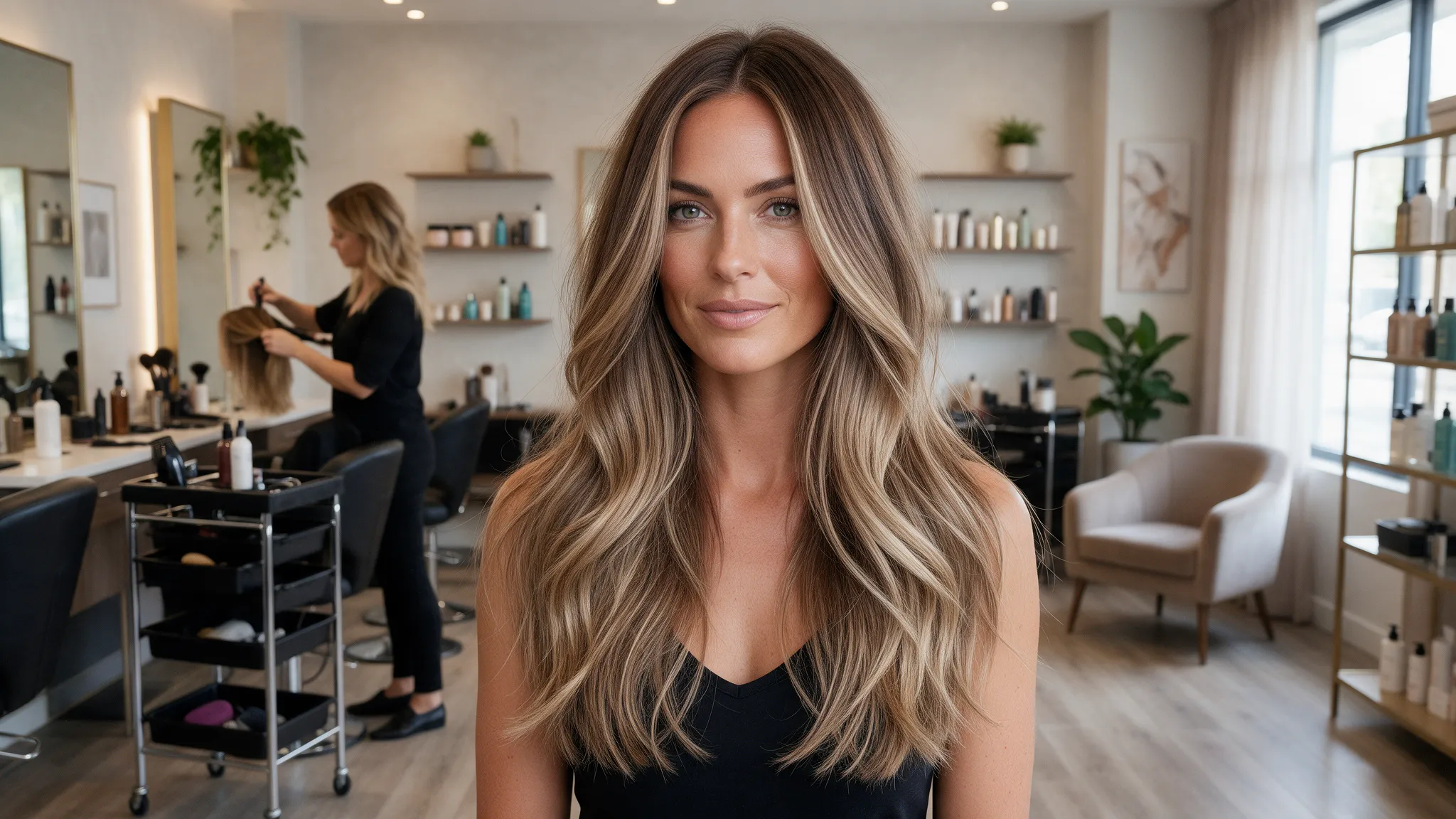
Ombre is a result, not a technique. It describes a gradient: darker at the root, lighter toward the ends, with a visible transition zone. That result can be achieved using balayage, foils, or freehand methods. This is the distinction most clients miss entirely. They ask for ombre when they actually mean balayage, or the other way around.
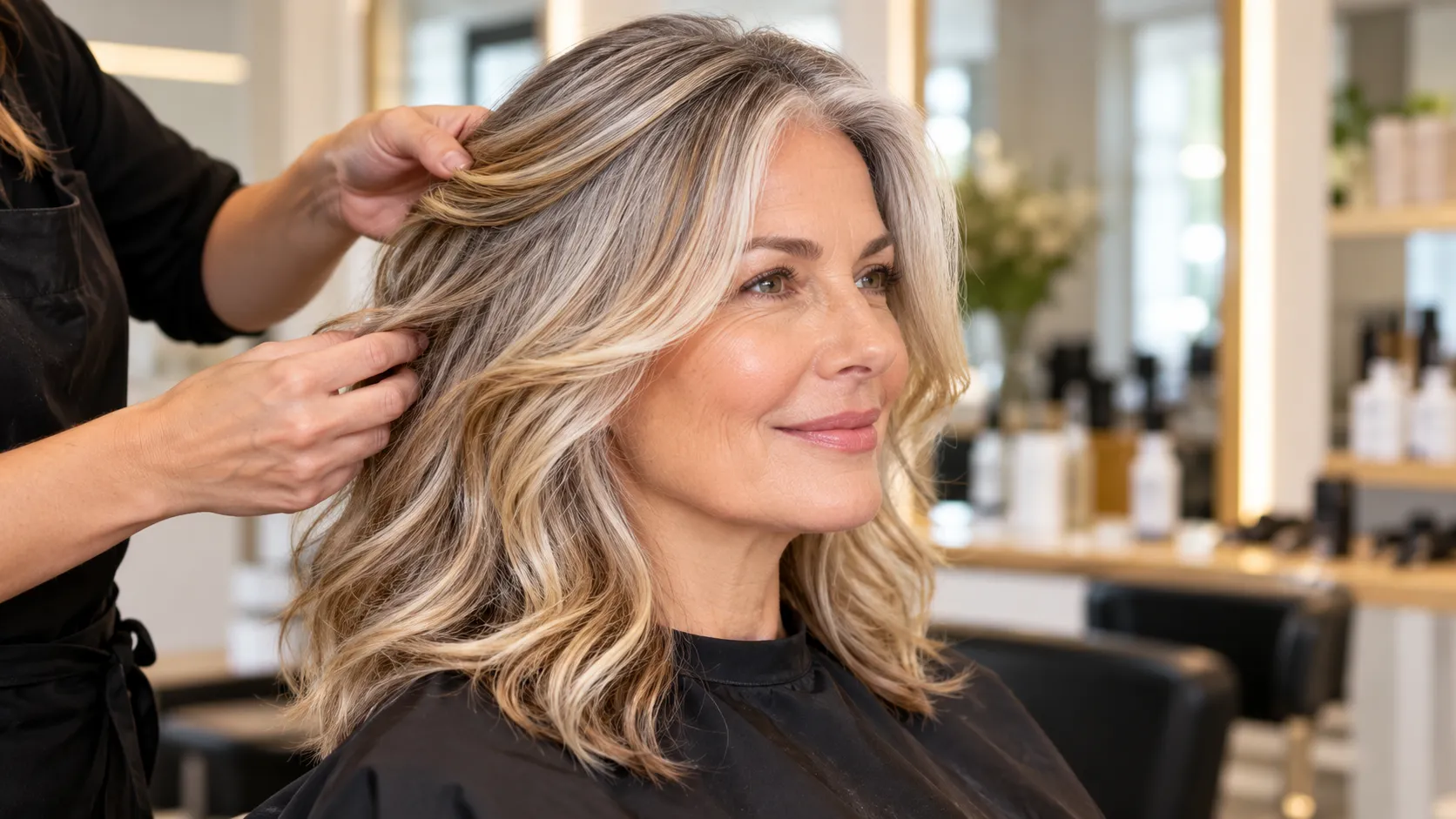
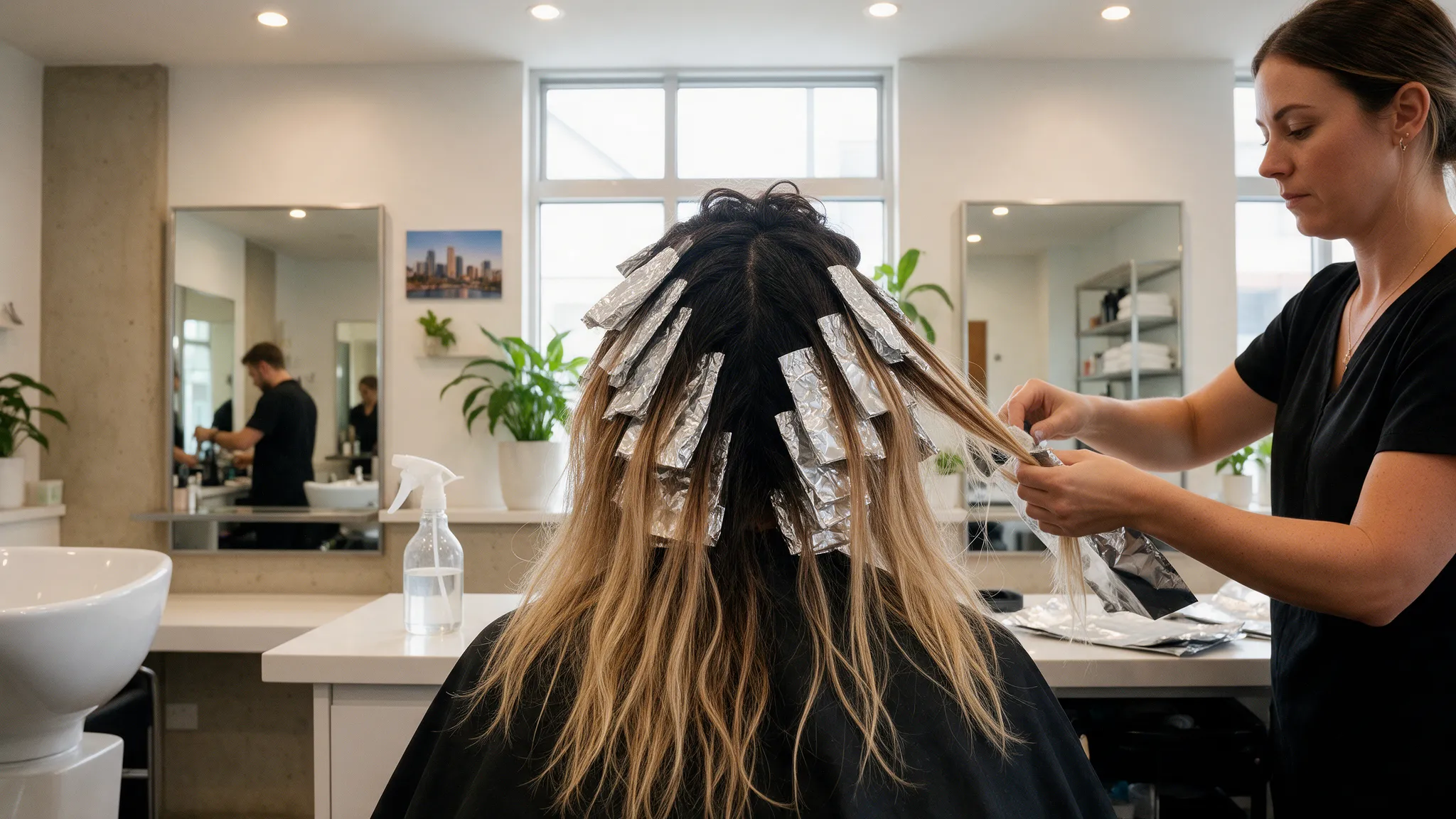
Foilyage sits between traditional foil highlights and balayage in terms of finish. It uses the same freehand painting as balayage, but sections are then wrapped in foil. The foil adds heat, driving the lightener further into the hair shaft and producing a brighter, more uniform lift.
Short version: balayage is a technique producing soft results, ombre is a gradient result achievable by multiple techniques, and foliage is a technique producing brighter results. A client can ask for an ombre result and get it via balayage or foilyage. They are not mutually exclusive.
Queensland’s humidity matters here. The soft grow-out of balayage is forgiving in the heat. Foilyage’s brighter lift looks striking but may need toning more often, because sun and moisture affect colour vibrancy faster than in cooler climates.
How does Queensland humidity change which technique you should choose?
A client came in from the Logan City area after trying ombre at another salon. Within a few weeks of a Queensland summer, the hard transition line had turned brassy and the contrast looked harsh rather than blended. She was frustrated. She had loved the result in the chair and watched it change quickly once the heat got to it.
Bharti assessed her hair, which was dark and on the coarser side, and recommended foliage. The freehand placement kept the result looking natural, while the foil wrapping gave enough lift for a genuinely bright finish. A toner was applied at the end to neutralise warmth and extend the colour’s life in the humidity. She came back for a toner refresh a few months later, not a full redo. That is the difference the right technique makes.
This is something Bharti observes consistently. Freehand balayage on fine hair in humid conditions can look beautiful but can appear washed out quickly without a toner finish. At Hair Hub Hillcrest, the balayage service at Hair Hub Hillcrest always includes toner. It is not an optional add-on. The toner is what makes the result last, and the price reflects a complete service, not just the painting step.
Hair type also determines the right call. Thick or coarse hair, common across the multicultural Brisbane southside and Logan City community, often needs foliage to achieve enough lift. Balayage alone on very dark, coarse hair can produce uneven or underwhelming results without the added heat from foil wrapping.
What our Hillcrest clients say:
“Today our daughters got their hair cut by the lovely Bharti. Bharti really does make you feel welcome and is very accommodating to children. Cosy little studio salon, very affordable and does a great job overall. Definitely going to be our regular hair dresser. Thank you again Bharti ??”
“I was so happy with my hair the hairdresser was very friendly it was my first visit to her hair salon and I will be back”
“Highly recommend No hesitation, Excellent caring and very detailed in her craft . No rushing your service, due to overlap of appointments”
How do you know which technique is right for your hair?
Three questions. Answer these before you book.
How dark is your natural base? Very dark hair at levels 1 to 4 will need foliage or full foils to achieve visible lightness. Balayage alone on dark hair often produces a subtle result that disappoints clients expecting a dramatic change. Hair porosity also plays a role: low-porosity hair resists lightener, which means the extra heat from foliage does real work that freehand painting alone cannot.
How often can you come back? Balayage grow-out is the most forgiving. Some clients go 4 to 6 months between appointments without the result looking neglected. Foilyage needs a toner refresh sooner. Ombre with a defined transition line needs more frequent blending as it grows.
What finish do you actually want? Soft, sun-kissed, and natural points to balayage. Bright, high-contrast, and vivid points to foliage. A gradient from dark to light is an ombre result, achievable via either technique depending on how defined you want the transition.
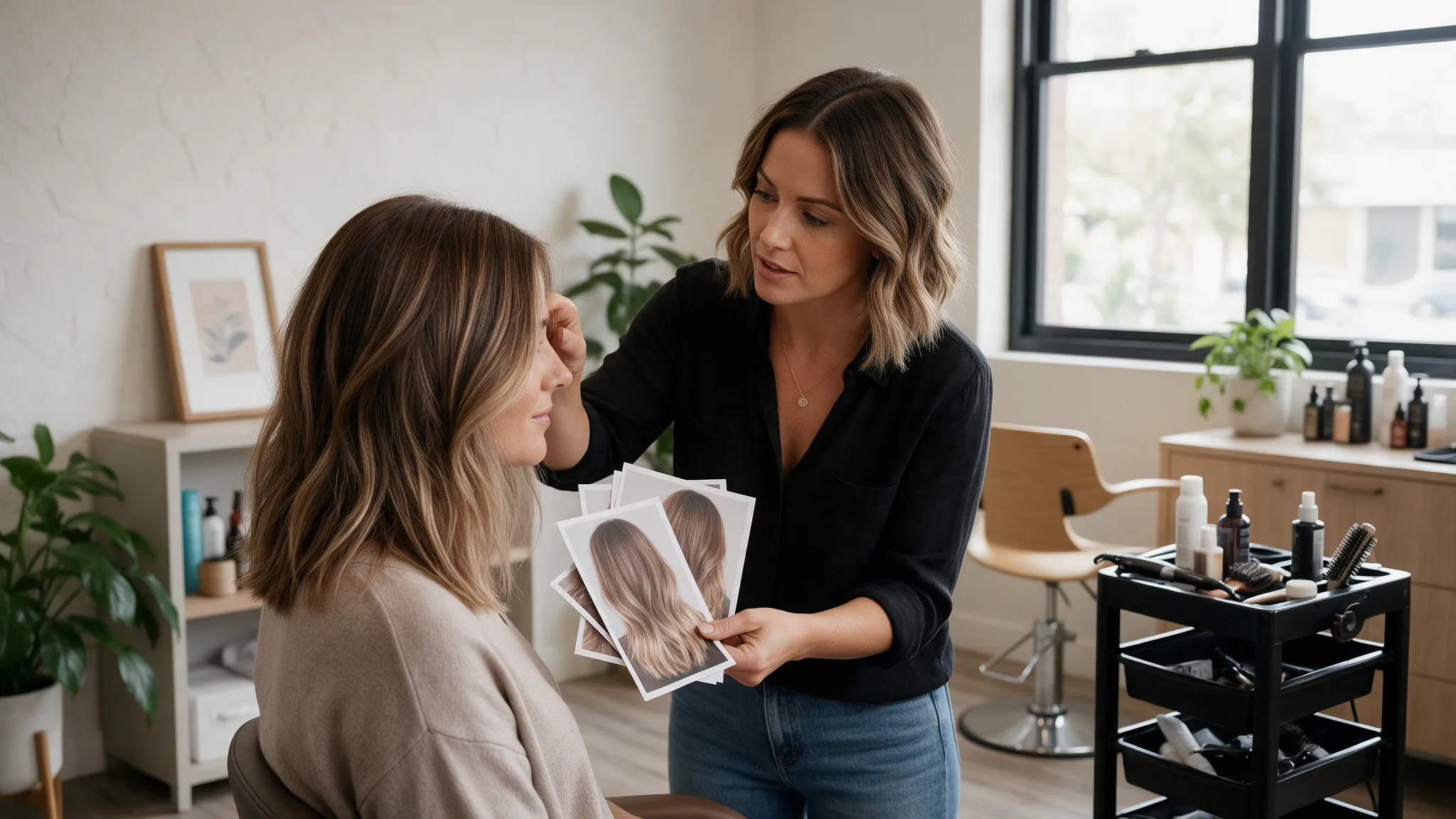
What to tell your stylist: bring a reference photo. State your grow-out tolerance upfront. Ask specifically whether the result they are describing uses freehand balayage, foilyage, or foil highlights. The terms matter, and a good stylist will not mind being asked.
For more reading on what to expect from colour appointments, our colour services blog covers the broader picture.
We hear this a lot in our salon: someone comes in wanting a colour refresh, but they are not sure whether balayage or ombre is the right fit. Understanding the balayage vs ombre difference actually shapes everything, including how we plan upkeep. Balayage is hand-painted, so the grow-out is softer and more forgiving. Ombre is a defined gradient. Both are beautiful. Neither is wrong. A client from Hillcrest came in recently with medium-length hair and a genuinely busy week. We asked what wash days actually looked like at home, not what she hoped they would look like. Honest answer: twice a week, quick dry, minimal styling. So we chose balayage.
Balayage vs foils vs foilyage: what is the real difference in outcome?
| Technique | Finish | Grow-out | Maintenance | Best for | Humidity performance |
|—|—|—|—|—|—|
| Balayage | Soft, natural | Very gradual | Low (4 to 6 months) | Fine to medium, lighter bases | Good: soft lines hide fading |
| Foilyage | Bright, blended | Moderate | Medium (toner refresh at 8 to 12 weeks) | Dark, thick, coarse hair | Good with toner; fades faster without |
| Foils/Highlights | Uniform, high contrast | Visible regrowth line | Higher (every 6 to 8 weeks) | All types wanting consistent coverage | Requires consistent toning in humidity |
| Ombre | Gradient, two-tone | Depends on technique | Low to medium | Clients wanting low-maintenance drama | Hard lines can look brassy faster |
One thing worth knowing: foliage is not offered at every salon. It takes longer and requires a stylist comfortable with both freehand painting and foil work. Worth asking specifically whether your stylist has hands-on experience with the technique before you book.
Foilyage has grown steadily as a balayage alternative across Australian salons over the past few years, largely because it bridges the gap between the soft finish of balayage and the brightness of traditional foils. The tonal control it offers makes it particularly suited to darker hair that needs real lift without looking over-processed.
So, which one should you book?
Balayage for soft, low-maintenance colour that grows out beautifully. Foilyage for bright lift on dark or coarse hair, especially if you want a result that holds in Queensland’s heat. Ombre for a gradient finish, achievable via either technique depending on how defined you want the transition.
If you are in Hillcrest, Browns Plains, or anywhere across Logan City and you are still not sure which technique suits your hair, that is exactly the conversation to have in the chair before anything is mixed. Bharti will look at your base colour, texture, and grow-out tolerance before recommending a direction.
Book your appointment and come in with your reference photos. The rest is handled.
Frequently Asked Questions
What is better, ombré or balayage?
Neither is objectively better, as ombré and balayage suit different hair goals and lifestyles. Ombré creates a more defined transition from dark roots to lighter ends, making it a bold, low-maintenance choice for those who want a strong contrast. Balayage uses freehand painting to blend colour more naturally throughout the hair, giving a softer, sun-kissed result that works well for clients who want a seamless grow-out.
What are some alternatives to balayage?
Popular alternatives to balayage include foil highlights, babylights, colour melting, and toning treatments. Foil highlights deliver more precise, consistent lightening and are a great option if you want brighter or more uniform colour placement. Babylights use very fine sections to mimic the subtle, delicate colour seen in children’s hair, while colour melting blends multiple shades together for a smooth, gradient finish.
Is it better to get a balayage or highlight?
The better option depends on how much contrast, brightness, and maintenance you are comfortable with. Traditional foil highlights tend to produce a more uniform, brighter result and are ideal if you want noticeable colour throughout your hair. Balayage grows out more gradually and requires fewer salon visits, making it a practical choice for clients who prefer a more relaxed maintenance routine.
We keep recommendations grounded in what you actually do at home: your routine, budget, and how much time you want to spend styling each week. In our Hillcrest salon we’ll flag what to watch over the next few visits so expectations stay honest and the plan still fits your life.
Commute length, humidity, and five-minute styling windows matter as much as the cut. In our Hillcrest salon we start by hearing what a typical week looks like, set upkeep that matches that reality, and refine the finish so the line of the cut still makes sense after the first shampoo at home.
Ready for your next appointment?
When you are ready to book, use our online booking and choose a time that suits your week.