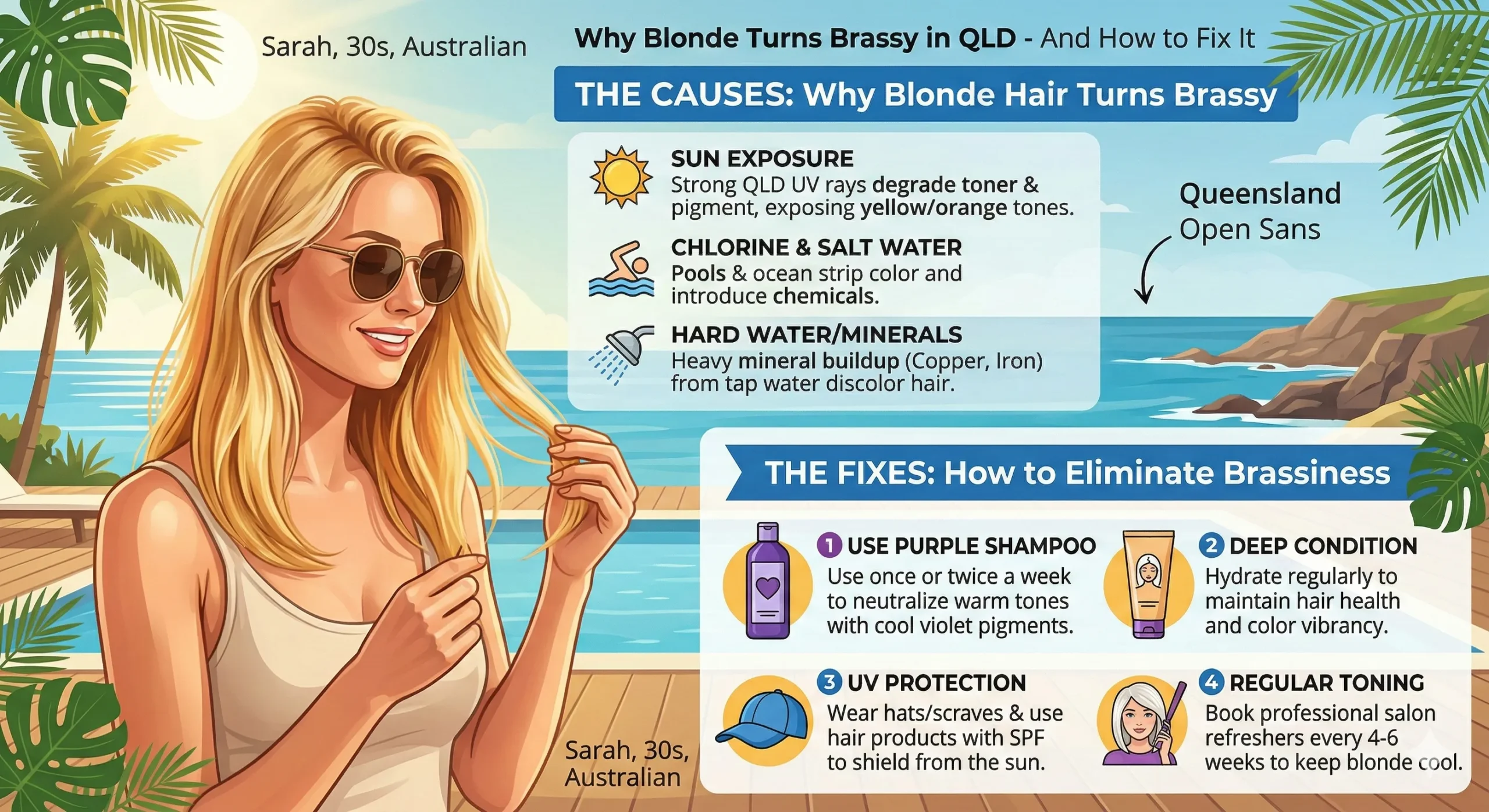
Let’s cut the fluff. If your blonde looks stripy, brassy, or flat after a few weeks in Brisbane’s air, it’s not you. It’s our weather. Specifically, the dew point. Logan and Hillcrest ride high humidity most of the year, and summers often bring dew points north of 24°C. That’s when hair swells, cuticles lift, and colour shifts. Fast.
Here’s the thing: you didn’t buy the wrong shampoo and you’re not “bad at styling.” The climate fights your foils. UV fades tone. Moisture warps shape. Sweat and salt mess with porosity and bond integrity. So if you want a soft, sunlit, natural finish that actually lasts here, you need to play to Queensland conditions.
Here’s my promise. I’ll break down the science in plain English, show you what actually works at home, and then tell you the professional move that fixes it long term. No waffle. Just results.
The Science: Why Hair Foils Behave Differently in Hillcrest
Humidity makes hair swell. Simple as that. Here’s why. Your hair’s made of keratin proteins bundled in the cortex, wrapped by overlapping cuticle scales. Those proteins connect with hydrogen bonds—tiny Velcro that locks in shape. When air is moist (hello, Brisbane summer), water slides in, breaks and reforms those hydrogen bonds, and your hair changes shape. Frizz. Flattening. Random bend. Whatever your natural pattern is, it gets louder.
- Cuticle: the outer “shingle” layer. When raised, hair grabs water like a sponge.
- Cortex: the strength core where colour molecules live.
- Porosity: fancy word for how easily your hair soaks up and loses moisture. High porosity = colour drops out faster and swells more in humidity.
- Bond integrity: those tiny hydrogen and ionic bonds that keep your hair behaving.
As noted in Scientific American, moisture in humid air breaks and reforms hydrogen bonds inside the cortex; when too much water enters—especially through a compromised cuticle—the fibre swells and can crack, which ramps up frizz and dulls shine (source: Scientific American, “Why Hair Turns Curly and Frizzy in the Summer, according to Chemistry”).
Local factor you can feel: Brisbane and Logan sit in that steamy band where dew points in summer are often above 24°C. That’s not just “humid.” That’s “your hair is constantly rehydrating whether you want it to or not.” On top of that, Queensland’s UV index is 3+ all year—and extreme in summer—so UV is always working on your colour molecules. UVA bleaches tone; UVB chips away at proteins. Translation: blonde gets brassy; brunette turns warm; greys can yellow.
Add sweat. Salt from the gym or school pickup heats up under the sun, raises friction, and lifts the cuticle even more. That’s why your hair looks lovelier in aircon and a bit chaotic 10 minutes outdoors.
Hair foils Brisbane: what “natural” actually looks like here
- Softer contrasts near the hairline (where sun hits first).
- Finer weaves through the crown to avoid “stripes” when humidity puffs strands apart.
- Strategic lowlights or toner depth to preserve dimension as UV fades tone.
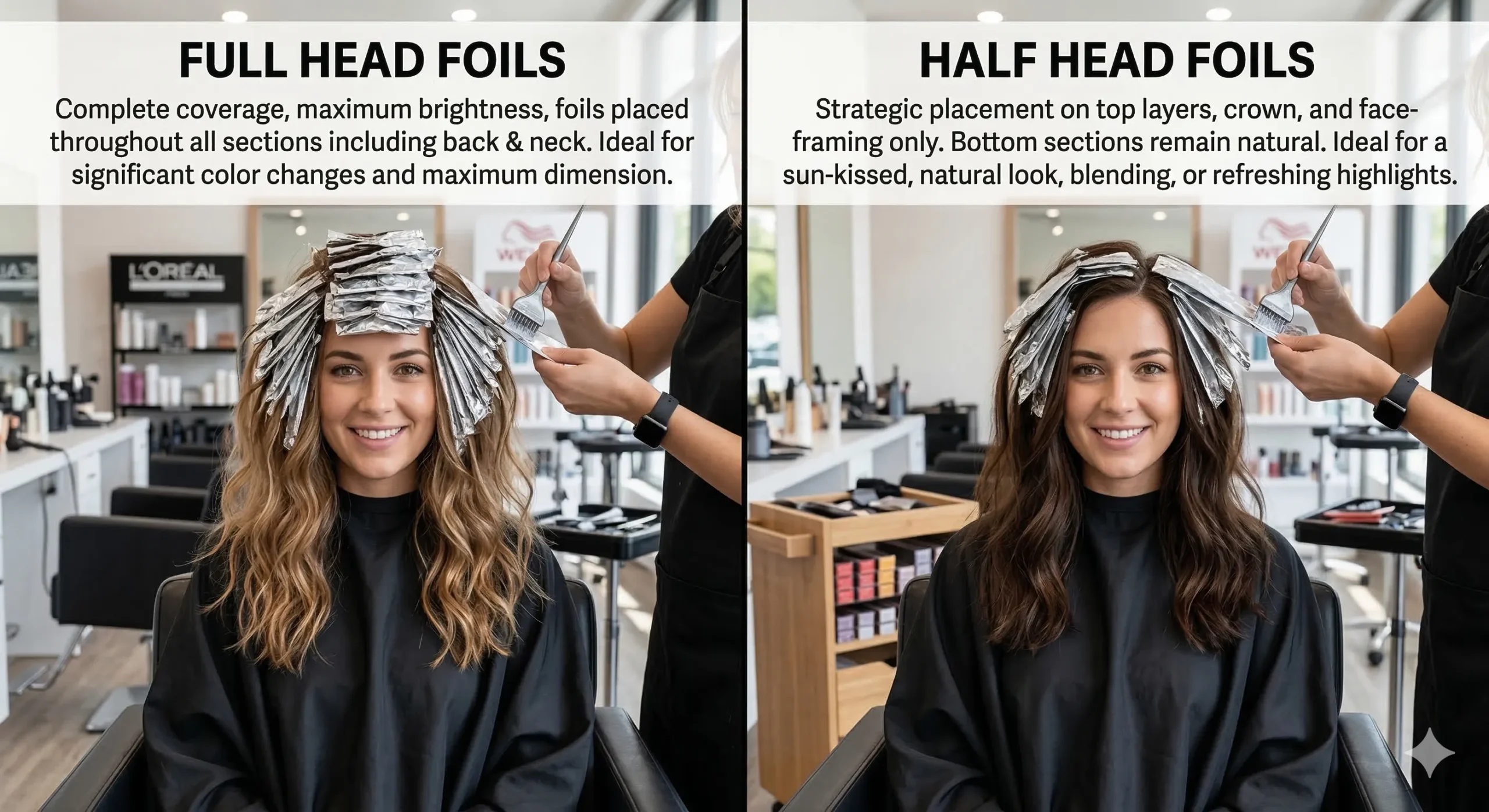
hair foiling techniques with descriptions of their placement and ideal results.
“I’ve Tried Everything”: Why Supermarket Fixes Fail
Look, I love a bargain too. But here’s the trap. Many supermarket “anti-frizz” lines rely on heavy, non-water-soluble silicones. They can feel smooth day one. Then heat, sweat, and Brisbane’s humidity turn that film into buildup. Your hair repels water… until it doesn’t, then it drinks too much at once. The result? Flat at the roots, fluffy or sticky at the ends, and toner that won’t grab evenly because the cuticle is coated.
Common culprits:
- Dimethicone-heavy formulas without proper cleansing steps.
- Hairsprays with strong resins but no humidity resistance—crunchy, then poofy.
- Oils that sit on top, bake in UV, and oxidise, warming your blonde.
Last month, a mum from Browns Plains sat in my chair after a “quick box-dye fix.” She wanted to mute banding before school photos. In humidity, that box dye grabbed hard on her porous ends, went sludgy-warm, and her foils from months ago showed as zebra lines. We had to correct the warmth, re-establish fine weaves up top, and rebuild her cuticle with bond care before any tone would sit pretty. Could we fix it? Yep. But it took two visits. Box dye always promises fast. Queensland weather exposes every shortcut.
This is similar to what we discuss in our guide on sun-kissed balayage for dark hair—low-maintenance colour that plays nicer with our climate. If you’re curious about a softer grow-out alternative, read our related blog: Sun-Kissed Balayage for Dark Hair: Low-Maintenance Colour Ideas for Busy Queensland Women.
Best foils salon Brisbane: what to look for
- Talks porosity and bond integrity, not just “shade names.”
- Plans for UV fade with toner depth and gloss refresh cycles.
- Uses micro-weaves where humidity puffs hair most (temples, part, crown).
Client Reviews
“The blend is unreal—no stripes, no brass, and it actually lasts through summer gym runs.”
3 Expert Steps to Manage The Climate Problem at Home
Step 1: Ingredients that behave in humidity
- Hydrolyzed proteins (silk, keratin): tiny pieces “patch” weak spots along the cuticle and cortex, improving water management and bond feel.
- Lipids and ceramides (think 18-MEA mimics): these help reseal the cuticle’s protective layer, reducing porosity and making hair less “thirsty” in moist air.
- UV filters + antioxidants: a lightweight leave-in with UV filters helps slow colour fade; antioxidants mop up free radicals from sun exposure.
- Smart silicones: choose lightweight, humidity-resistant blends (look for PEG-modified silicones or balanced formulas) and pair with a gentle chelating/clarifying step weekly so you don’t get film build-up that blocks toners.
Pro Tip:
If your blonde looks dull, it’s often not “dryness.” It’s oxidation. Add a weekly antioxidant pre-wash and a pH-balanced gloss every 4–6 weeks to steady tone.
Step 2: Technique that seals shape
- Directional blow-dry: point the nozzle down the hair shaft. You’re ironing down cuticles, not blasting them open.
- The Cool Shot: finish every section with a 5–10 second cool burst to harden hydrogen bonds in the current shape. Sounds tiny. Big payoff.
- Micro-sectioning: apply a pea-size anti-humectant serum mid-lengths to ends in thin sections. Thin is everything. Over-application equals dull; thin layers equal control.
- Fringe/hairline first: these swell fastest in sticky air. Pre-treat with a light leave-in, then style and seal them before you do the rest.
Common Mistake:
Straightening first, products later. No. Lock in your leave-in heat protectant and humidity shield before your blow-dry or irons. Products after the fact just sit on top and smear.
Step 3: Maintenance that respects sweat, sleep, and sun
- Gym hacks: Rinse sweat fast. Even a 20-second cool water rinse post-workout helps. Salt lifts cuticles and kills tone. Follow with a light leave-in.
- Sleep setup: Silk pillowcase. Less friction, fewer lifted cuticles. If your hair “froths” overnight, a loose silk scrunchie bun high on the head prevents crease lines.
- Outdoor buffer: A UV-filter mist in the car or pram caddy. Reapply before school pick-up. Reapply before weekend sport. Think of it like face SPF for your toner.
Blonde foils Hillcrest: staying soft, not stripy
- Use babylights (ultra-fine, baby-fine weaves) near the hairline and part so when humidity expands strands, the pattern still reads soft.
- Ask for a “veil” highlight through the crown—not chunky panels.
- Plan a toner/gloss refresh in 4–8 weeks, adjusted for your outdoor time.
The Permanent Fix: Foils at Hair Hub Hillcrest
Here’s the bridge: Home care slows the climate problem. Our foils solve the look. Why? Because placement beats product in Queensland. We choose section sizes that survive swelling, toner depths that outlast UV, and bond care that keeps porosity in check. That’s what creates the “is it natural?” effect even in 80% humidity afternoons.
The process? You’ll feel cool and calm. Fine weaves where the eye reads first (hairline, part), dimensional lowlights to protect brightness, and a gloss that balances pH and shine. We use professional hairdressing foil—lightweight, wide where needed for long hair—and precision tension so your regrowth line grows in soft, not stripey.
Read our full guide and see pricing on our Foils service page:
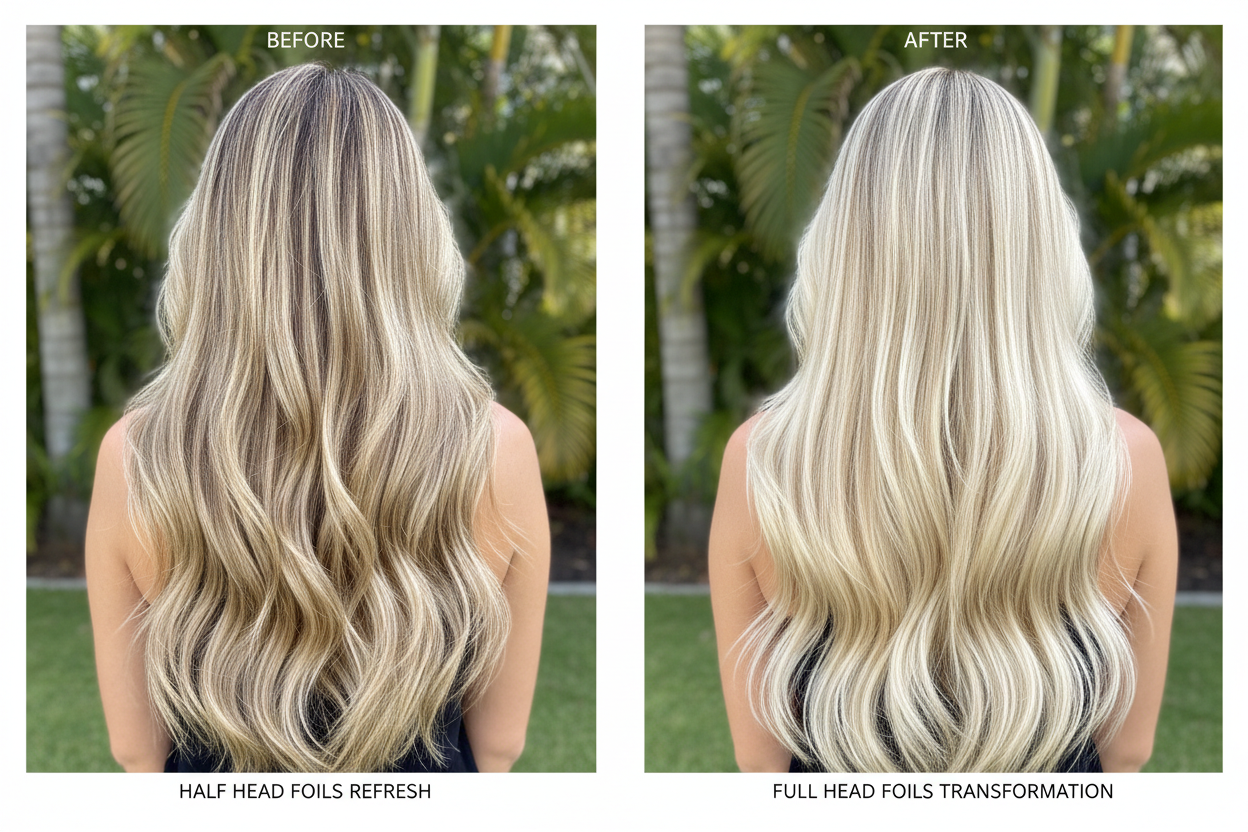
Half head foils Browns Plains: when it’s “enough”
- Ideal for maintenance on established blondes.
- Focus on part, crown, and money pieces to keep the eye happy.
- Quicker, lower cost, but not for big colour shifts.
Full head foils Brisbane Southside: when you need it
- Best for first-time blonding, big brighten-ups, or if you wear your hair up (back sections matter).
- Essential for blending old banding or box dye mishaps.
- More time, more foils, more even end-to-end lightness.
FAQ: Questions We Get in the Chair
- What’s the difference between highlights and foils?
Highlights are the lighter pieces. Foils are the tool/technique we use to isolate and lighten those pieces precisely. In our climate, foils let us control heat, lift, and placement so the pattern stays natural even when humidity puffs strands apart. Balayage is painted open-air; foils are wrapped—both can look natural if the section size and contrast are right. - Full head vs half head foils—how do I choose?
Ask yourself: do you wear it up a lot? Do you want brightness from nape to crown? Full head gives end-to-end lightness and is perfect for bigger changes or correcting old colour. Half head targets the part, crown, and face frame—the areas you and everyone else notice first. It’s brilliant for maintenance or a natural, sun-kissed result. - How much is a full head of foils? How much should hair foils cost?
Prices vary with hair length, thickness, and whether toners, bond care, and blow-dry are included. In Brisbane/Logan, you’ll commonly see half head ranging roughly from entry to premium tiers, and full head priced higher accordingly. If a price seems unbelievably cheap, something’s missing—usually time, toner quality, or bond care. We list clear inclusions and timing on our Foils page so you know exactly what you’re getting. - What do foils do for hair?
Foils isolate sections so we can lighten or tone precisely without bleed. They control heat (aluminium reflects and contains warmth), which means cleaner lift and better bond management. End result: we can dial your blonde to the exact tone and contrast you want and keep it looking natural in Queensland’s humidity and UV. - Can foils cover grey? What about foils for grey coverage Brisbane clients?
Yes—with nuance. Foils can blend greys by scattering lighter pieces that make silvers less obvious. For high grey percentages, we often pair foils with a root shade for fuller coverage. In Hillcrest’s bright sun, a smart blend looks softer and grows out better than a harsh solid block.
Pro Tip:
If you want “baby lights Brisbane Southside” level softness, ask us to micro-weave your hairline and part with super-fine foils and keep the contrast low. That’s how you avoid stripes when humidity expands your strands.
Foil highlights that last in QLD humidity
- Invest in bond-building in-salon and a weekly protein/lipid treatment at home.
- Keep a UV-filter leave-in handy, reapply before outdoor stints.
- Don’t skip toner refresh; UV and sweat shift tone even if lift is perfect.
Natural-looking foils in Brisbane aren’t guesswork. They’re science plus placement. Manage porosity, seal cuticles, protect from UV, and choose the right coverage—half head for subtle maintenance, full head for full-spectrum brightness and blend. Want a result that survives school runs, gym sweat, and weekend sun? Let’s map it to your lifestyle and our climate.
Hair Hub Hillcrest is a private, appointment-only salon. We don’t do rush jobs. Text us to secure your spot. Book Now – Women’s Foils: