Stop using these words interchangeably. Seriously. They aren’t the same thing.
Most people assume “hairdresser” and “hairstylist” are just two different labels for the same job. Like “soda” and “pop.” They’re not. If you’re booking an appointment thinking the title doesn’t matter, you are gambling with your hair health.
Here’s the deal. One is a protected trade that involves years of chemical study, structural engineering, and biology. The other focuses on the finish. The aesthetic. The “look.”
In the world of superior hairdressing, knowing this difference is the key to avoiding a colour disaster or a cut that falls flat the second you step into the Logan humidity.
Let’s be real. You don’t want a decorator to build your house foundation. You want an architect. The same logic applies to your hair.
If you’ve been confused about who to book for your next new look, you aren’t alone. But by the end of this post, you’ll know exactly who holds the scissors and who holds the hairspray.
The Core Distinction: Trade Qualifications vs. Visual Styling
Let’s cut through the noise.
In Australia, a hairdresser is a trade-qualified professional. We are talking about a Certificate III in Hairdressing (or higher). This isn’t a weekend course. It’s an apprenticeship. It’s years of studying the cortex, the cuticle, and the chemistry of how colour molecules penetrate the hair shaft.
A hairdresser is trained to:
- Perform precision cuts that alter the shape and weight of the hair.
- Mix and apply complex chemicals (colour services, bleach, keratin).
- Diagnose scalp conditions and hair porosity.
- Execute permanent structural changes (perms, straightening).
A hairstylist, on the other hand, often refers to someone specializing in the styling aspect. Think blow dries, upstyles for weddings, or editorial work.
Now, here is where it gets tricky. Most qualified hairdressers are also excellent hairstylists. We can cut the hair and style it. But a person labeling themselves solely as a “stylist” may not have the full trade qualification to chemically treat or structurally cut your hair.
Why Terminology Matters
Bond integrity. Porosity. pH levels.
These aren’t just buzzwords we use to sound smart. They are the science behind why your hair doesn’t snap off when we bleach it. A qualified hairdresser understands the biology of the hair. We know that if we overlap bleach on a compromised cuticle, the hair melts.
A specialist hair stylist is often a master of the aesthetic—making the hair look fabulous for an event. But they might not have the deep chemical background to correct a brassy blonde or fix a botched box dye without causing breakage.
Technical Knowledge vs. Visual Finish
As noted by the Australian Hairdressing Council, the industry standard relies on formal training to ensure consumer safety, especially regarding chemical handling. Without that foundation, you aren’t getting a professional service; you’re getting a guess.
The “QLD Filter”: Why Credentials Matter in Hillcrest Humidity
I say this to every client who sits in my chair.
We live in Queensland. We don’t live in Paris or New York. We live in a subtropical sauna.
In Hillcrest, Browns Plains, and Logan City, the dew point is our enemy. High humidity forces moisture into the hair shaft, swelling the cuticle and causing frizz.
Why does this matter for the “Hairdresser vs. Hairstylist” debate?
A hairstylist can manipulate your hair with heat tools and product to look smooth for a photo. They can seal the cuticle temporarily. But if the underlying cut isn’t structured correctly for your hair density and texture, that smoothness will vanish the moment you walk out into the Brisbane heat.
A qualified hairdresser cuts for the climate.
We remove weight internally so the hair doesn’t “mushroom” when it swells. We understand that healthy hair resists humidity better than damaged hair. When we perform colour services or smoothing treatments like Keratin smoothing, we are doing it to engineer the hair against the environment.
Pro Tip: If you have grey hair, the texture changes entirely. It becomes coarser and more wiry. A stylist might just spray it down. A hairdresser knows you need a different chemical approach to soften that cuticle. We actually talk about this in depth in our guide on the best hair colour for grey hair to look younger.
“I’ve Tried Everything”: The Danger of the Wrong Choice
I had a new client come in recently. Let’s call her Sarah.
Sarah was in tears. She had gone to a “studio” that advertised themselves as expert colourists and stylists. She wanted a balayage—that seamless, sun-kissed look.
She sat in the chair for four hours. She paid premium prices.
The result? Banding. Harsh lines. And her ends were fried.
Here is what happened. The person working on her was a fantastic stylist. They gave her a killer blow dry at the end that hid the damage and the bad blending. Sarah left feeling okay, but the next morning, when she washed her hair? Disaster.
She went to a hairstylist when she needed a hairdresser.
The person didn’t understand the lift capability of the bleach they were using. They didn’t understand that Sarah’s ends were more porous than her roots. They just painted and prayed.
The Reality Check:
If you need a trim or a wash-and-blow-dry for a dinner date, a stylist is great.
If you need colour correction, a complete new look, or a precision cut, you need a trade-qualified hairdresser.
Don’t waste your time or money on a service that looks good for 24 hours and ruins your hair for 24 months.
⭐ REVIEW BY A LOCAL: “I went to Hair Hub after a bad experience elsewhere, and the difference in knowledge was obvious immediately. My hair is finally healthy.” – Jessica, Browns Plains
3 Expert Ways to Vet Your Professional
So, how do you know? You’re scrolling through Instagram, looking for best hairdressers or a salon in Brisbane, and everyone claims to be the best.
Here is how you separate the pros from the amateurs.
1. The Consultation Interrogation
A real pro asks questions. Lots of them.
If you sit down and they just say “What are we doing?” and start cutting, run.
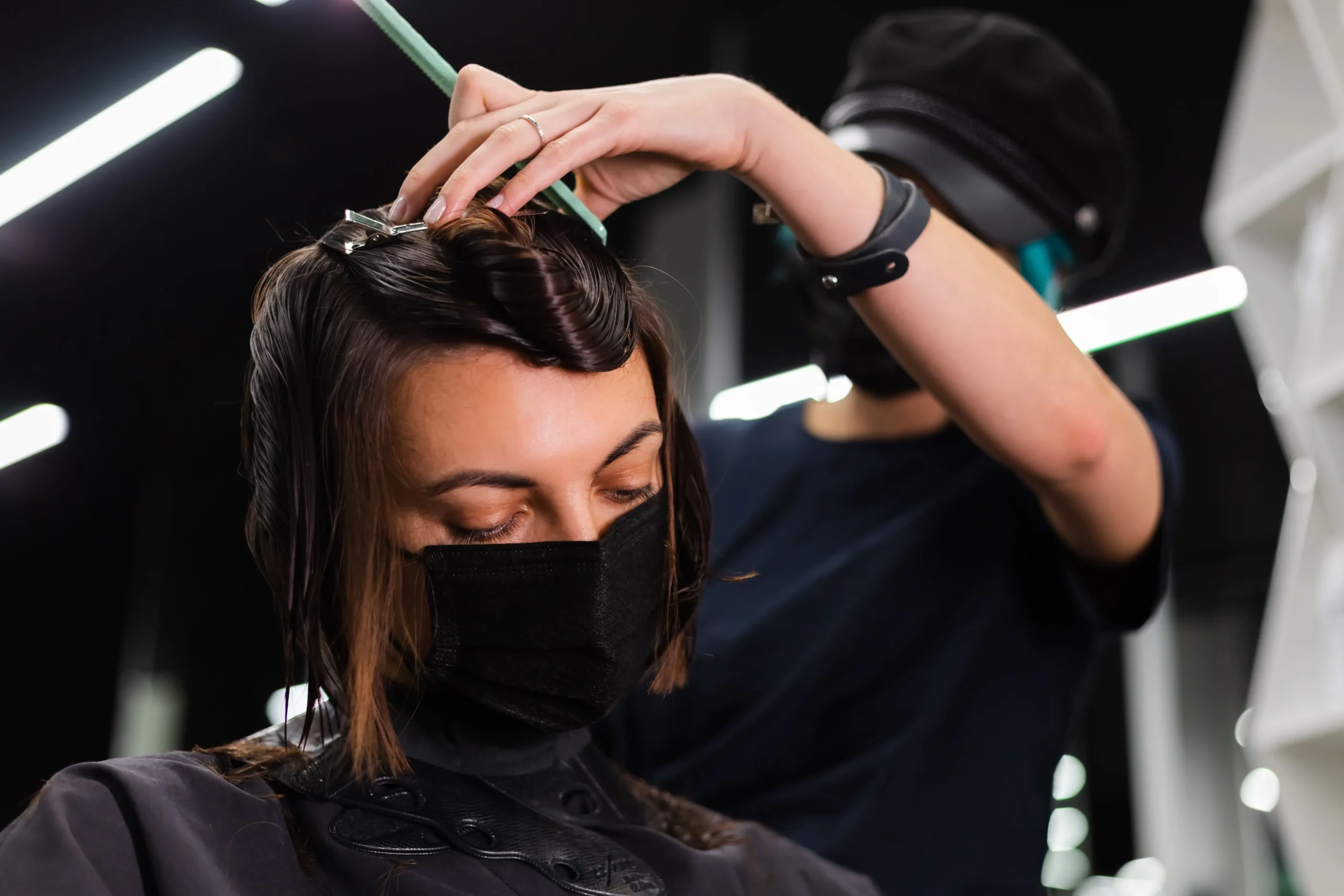
A qualified hairdresser will touch your hair. They will pull a strand to test its elasticity (bond integrity). They will ask about your water quality at home, your medication, and your history with box dye. They are diagnosing the patient before prescribing the cure.
2. The Terminology Test
Listen to the words they use.
Are they talking about “shine” and “softness”? Or are they talking about “protein,” “moisture balance,” and “oxidisation”?
Superior hairdressing requires a vocabulary of science. If they can’t explain why your hair is breaking (beyond “it’s dry”), they might not have the training to fix it.
3. The “Grow Out” Factor
This is the ultimate test.
A great haircut should look good eight weeks later.
A style cut performed by a qualified hairdresser grows out seamlessly because the structure is sound. A cut done by someone focusing only on the immediate finish will start to look heavy, blocky, or uneven after two weeks.
The Permanent Fix: Hair Hub Hillcrest
You don’t need to drive into the city salon chaos to get expert care.
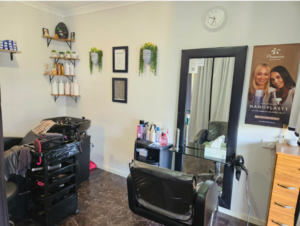
At Hair Hub Hillcrest, we are trade-qualified experts. We don’t just “do hair.” We engineer it.
We understand the difference between a hair stylist and a hairdresser because we have put in the years of training to be the latter. We specialise in bespoke colour, colour techniques, and low-maintenance cuts that survive the Logan summer.
We use professional, salon grade products like Olaplex to ensure your hair integrity is respected during every chemical service. Whether you are after blonde brilliance, a pamper session, or just healthy hair that actually grows, we are the team of highly skilled professionals you’ve been looking for.
This is a hair journey, not a pit stop.
If you are ready for a consultation with a qualified hairdresser who prioritizes the health of your hair over a quick fix, check out our full service menu.
View our Services and Pricing Here
FAQ: Questions We Get in the Chair
1. Is a barber the same as a hairdresser?
No, they are different trades. A barber specialises in clipper work, fading, and short back-and-sides styles, usually for men.
A hairdresser is trained in long hair, chemical curling, colouring, and precision scissor cutting.
While there is crossover, if you want a complex cut and colour, stick to a hairdresser.
2. Can a hairstylist apply chemical colour?
Legally, in a salon environment, chemical services should be performed by qualified hairdressers.
A hairstylist without a trade certificate might know how to apply dye, but they may lack the chemical theory
to handle unexpected reactions or corrections. Always ask about qualifications.
3. Why is a “Master Stylist” more expensive?
In hair services, titles usually reflect experience and education levels.
A “Master” or “Senior” has likely been on the floor for 10+ years and has completed advanced training.
You are paying for their speed, their diagnostic eye, and the guarantee that they can handle difficult hair needs.
4. Do you do “styling only” appointments?
Yes, we do. While we are qualified hairdressers, we love styling services too.
Whether it’s for a formal or just because you want to feel gorgeous,
we can provide a long-lasting blow dry or upstyle.
The difference is, we use our structural knowledge to make sure that style holds.
5. How often should I see a hairdresser vs. a stylist?
If your goal is maintenance of a cut and colour, you should see your hairdresser every 6 to 8 weeks.
If you just need your hair to look good for a specific event (like a wedding or party),
booking a stylist (or us!) for a one-off appointment is fine.
But for the health of your hair, the hairdresser is your primary care provider.